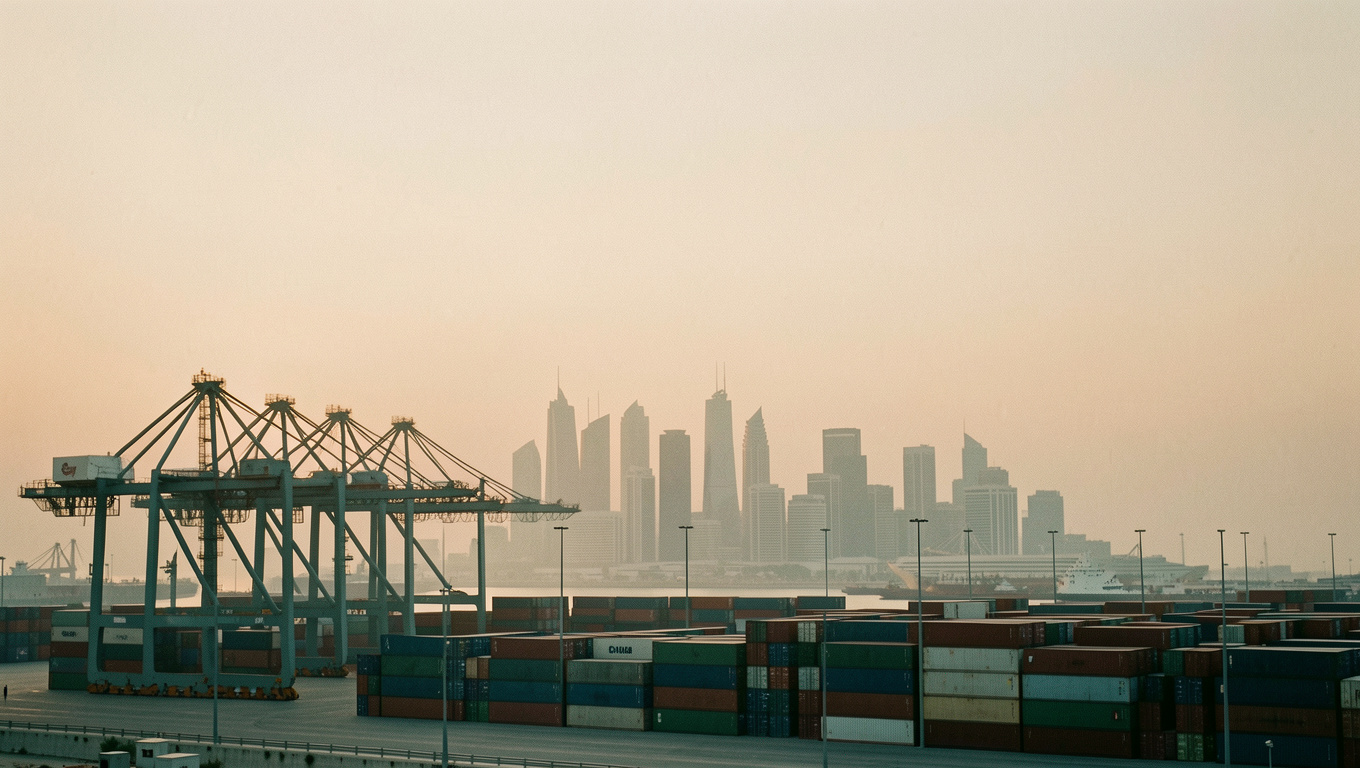
Dubai Free Zone vs Mainland
Which One Should Founders Choose in 2026?
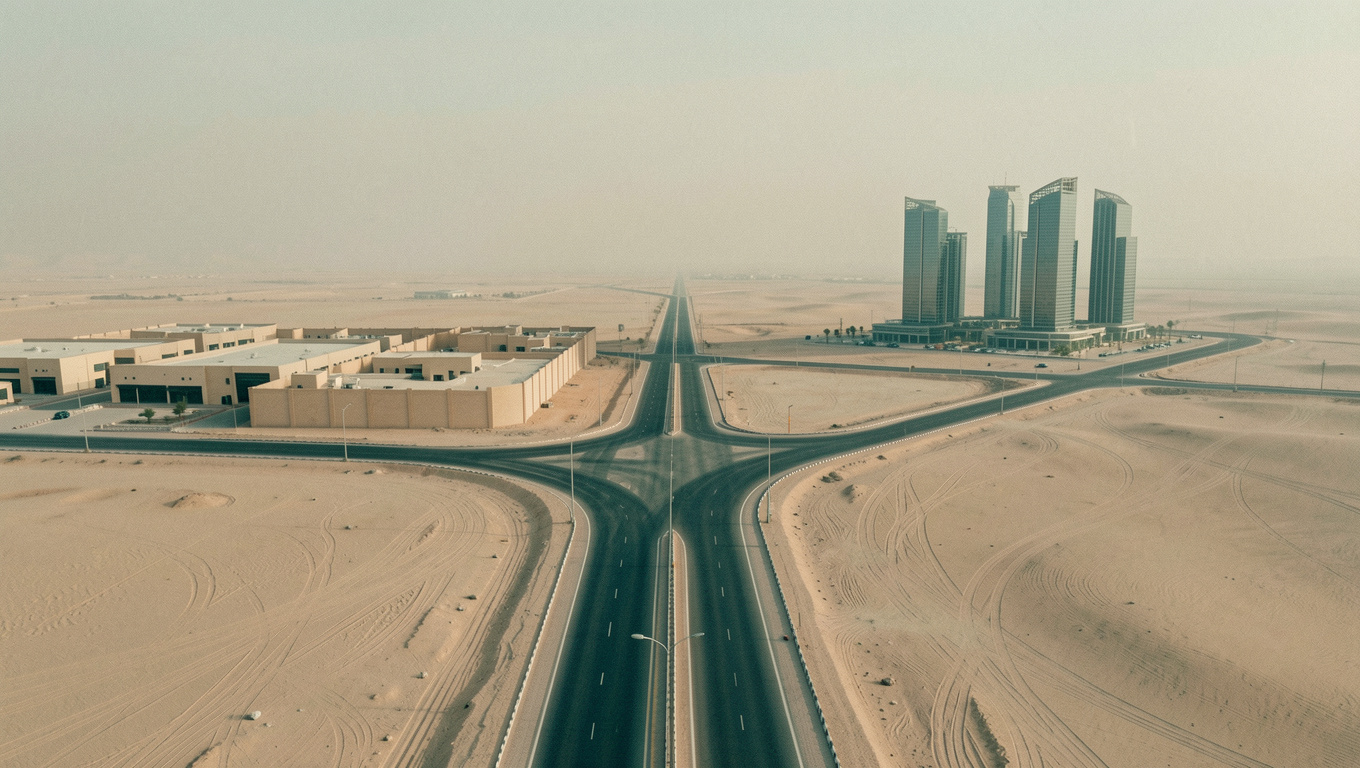
Choose a Dubai free zone if your customers are mainly outside the UAE or you trade goods through bonded stock; choose the mainland if you mainly sell to UAE customers. Since 2021, mainland companies can be 100% foreign-owned for most activities, so the real differences now are market access, customs and how UAE corporate tax applies.
Key points
The free zone vs mainland choice is about where your customers are, where goods move and who does the work, not about paperwork.
"Free zone" does not mean 0% tax. A free zone company pays 0% only on qualifying income, and most services billed to overseas clients are not qualifying income.
Mainland companies pay 9% corporate tax on taxable income above AED 375,000, the same rate a free zone company pays on non-qualifying income.
Since 2025, Dubai free zone companies can apply for a DET permit (AED 5,000 for six months) or licence to operate on the mainland.
Many growing groups end up with both: a free zone entity for re-export or regional work, and a mainland licence for UAE sales.
Dubai has moved beyond being a set-up destination. For founders and Indian businesses it has become a staging ground for regional growth: a place to test markets, hire, hold stock and project credibility across the Gulf and Africa.
Incorporation is quick, but the choice that shapes everything after it is structural. If you are an Indian exporter or trader, read this alongside our complete guide to setting up an Indian company in Dubai.
If you run a services business, our guide for an Indian company expanding to Dubai goes deeper.
What is the difference between mainland and free zone in the UAE?
A mainland company is licensed by the emirate's economic department, in Dubai the Department of Economy and Tourism (DET), and can trade anywhere in the UAE. A free zone company is licensed by a free zone authority, operates inside that zone, and has historically needed a distributor or agent to sell into the mainland.
Factor | Free zone | Mainland (DET) |
|---|---|---|
Ownership | 100% foreign ownership | 100% for most activities since 2021; strategic-impact activities restricted |
Selling to UAE customers | Via distributor, or DET permit or licence since 2025 | Direct, anywhere in the UAE |
Government contracts | Generally limited | Can bid, subject to each tender's rules |
Customs on goods | Duty suspended while goods stay in the zone | Duty paid on import, generally 5% of CIF value |
Corporate tax | 0% on qualifying income if all QFZP conditions met; 9% on the rest | 0% up to AED 375,000, 9% above |
Office | Flexi-desk to warehouse, inside the zone | Office with registered lease (Ejari), sized to activity |
Best fit | Re-export, regional hubs, overseas clients, holding | UAE-facing sales, retail, government work, multi-emirate operations |
For a fuller explanation of free zone rules, visas and limits, see what is a free zone company in the UAE.
Mainland ownership changed in 2021. Federal Decree-Law No. 26 of 2020 removed the general requirement for a 51% Emirati shareholder from 1 June 2021, and DET published a list of more than 1,000 commercial and industrial activities open to full foreign ownership. A short list of strategic-impact activities, such as banking, insurance and defence, remains restricted.
The free zone wall has also lowered. Under Dubai Executive Council Resolution No. 11 of 2025, free zone companies (other than DIFC entities) can operate on the Dubai mainland in three ways: a mainland branch, a dual licence operating from the free zone office, or a temporary permit. The Free Zone Mainland Operating Permit, launched in October 2025, costs AED 5,000 for six months and is renewable, according to the Dubai Media Office. The activity must be on DET's eligible list and the free zone must approve.
Which is better for trading businesses and Indian exporters?
For a trader that re-exports, holds regional stock or sells to distributors across the GCC and Africa, a free zone in a designated zone such as JAFZA is usually the better base. For a trader selling mainly to UAE retailers, contractors or consumers, the mainland usually is.
Three things decide it for goods businesses:
Customs. Goods landed in a free zone are not subject to customs duty while they stay there. They pay duty, generally 5% of CIF value under the GCC common external tariff, only when they enter the mainland. Indian-origin goods that meet the India–UAE CEPA rules of origin can enter at preferential rates, often zero.
Who buys. Qualifying income for a free zone company includes "distribution of goods in or from a Designated Zone", but only where the goods are imported through the designated zone and sold to a customer who resells or processes them. Sales to individuals are excluded.
Scale of the Indian presence. More than 2,300 Indian companies operate from JAFZA, and trade volume from India grew 40% in 2024, according to DP World. The ecosystem, logistics and service providers are already built for Indian exporters.
Example: a ₹150 Cr Ahmedabad chemicals exporter ships to distributors in Oman, Kenya and Tanzania from regional stock. A JAFZA entity with a small sales and logistics team fits well, and its distribution income may be qualifying. If the same company starts selling directly to UAE factories, it can add a mainland permit or licence for those sales rather than moving the whole business.
Which is better for services firms billing GCC clients?
For most consulting, technology and agency businesses billing clients across the GCC, the tax difference between free zone and mainland is smaller than it looks, because services to non-free-zone clients are generally not qualifying income. Choose on market access, client expectations and cost instead.
Under Cabinet Decision No. 100 of 2023, income from a non-free-zone client is qualifying only if it comes from a listed Qualifying Activity. The list in Ministerial Decision No. 229 of 2025 covers manufacturing, processing, qualifying commodity trading, fund and wealth management, headquarter services to related parties, treasury, aircraft and ship operations, distribution from designated zones, and logistics.
General consulting, marketing, software development and recruitment for third-party clients are not on it.
In practice:
A free zone consultancy billing a Riyadh client earns non-qualifying income. If that income exceeds the de minimis limit, the lower of 5% of revenue or AED 5 million, the company loses QFZP status entirely for that period and the following four.
A free zone firm billing other free zone companies can earn qualifying income, unless the activity is excluded.
A mainland services firm simply pays 9% on taxable income above AED 375,000, and can sell to any UAE client directly.
GCC clients bring their own rules. Saudi Arabia, for example, stopped contracting with companies whose regional headquarters is outside the Kingdom from 1 January 2024, according to the Saudi Press Agency, subject to exceptions. A Dubai entity can be an excellent GCC commercial base, but it does not open every Saudi government door.
How does UAE corporate tax work for free zone companies (QFZP)?
A free zone company pays 0% corporate tax on qualifying income and 9% on everything else, but only if it qualifies as a Qualifying Free Zone Person (QFZP) for the whole tax period. If it fails any condition, all its taxable income above AED 375,000 is taxed at 9% for that period and the next four.
To be a qualifying free zone person, a company must:
Maintain adequate substance in the free zone: people, premises and decisions proportionate to its activity.
Derive qualifying income, as defined in Cabinet Decision No. 100 of 2023.
Keep non-qualifying revenue within the de minimis limit: the lower of 5% of total revenue or AED 5 million.
Not elect to be taxed under the standard regime.
Comply with transfer pricing rules and documentation.
Prepare audited financial statements.
Ministerial Decision No. 229 of 2025 replaced the 2023 list of qualifying activities, with effect from 1 June 2023. It widened qualifying commodity trading to include industrial chemicals, by-products and environmental commodities such as carbon credits, provided there is a recognised quoted price.
Two other rules are worth knowing:
Small Business Relief. Businesses with revenue up to AED 3 million can elect relief for tax periods ending on or before 31 December 2029, after Ministerial Decision No. 131 of 2026. QFZPs cannot use it.
Large groups. Groups with global revenue of €750 million or more are subject to a 15% Domestic Minimum Top-up Tax from 2025.
What happened to Economic Substance Regulations?
Cabinet Resolution No. 98 of 2024 ended ESR notifications and reports for financial years starting on or after 1 January 2023. Substance still matters, though: it is now a condition of QFZP status, a transfer pricing question, and something every UAE bank assesses at onboarding.
What about VAT, banking and cost?
VAT is 5% for both. Registration is mandatory when taxable supplies and imports exceed AED 375,000 over 12 months, and voluntary above AED 187,500. Some free zones are designated zones, treated as outside the UAE for VAT on certain goods transactions, but services are generally taxed under the normal rules.
Banking is a qualification process, not a queue. Banks look for a residence visa for a signatory, a business plan that matches the licence, evidence of clients or contracts, a real address, and clear source of funds.
A free zone entity with large early inflows from abroad will face questions, and so will a mainland entity with a broad activity list. Founders who prepare this like a fundraising pack get through fastest.
Cost depends on activity, office and visas more than on jurisdiction. Official schedules show AED 15,000 a year for a JAFZA general trading licence and AED 20,265 for a DMCC standard trading and service licence, before registration, office and visas.
Provider estimates put a mainland general trading set-up at AED 38,000 to 55,000 in the first year with an office and one visa. For a full breakdown, see how much it costs to start a company in Dubai.
When is the UAE not the right fit?
The UAE is not the right choice if the business does not need to be there. If all your customers, people and decisions stay in India or elsewhere, a UAE entity adds cost, compliance and tax risk without a commercial gain. An Indian parent whose UAE company is managed entirely from India also risks the UAE company being treated as tax resident in India under the place of effective management test.
It is also a poor fit if the main goal is residency without running a business, or if your activity needs approvals the chosen zone or emirate cannot give.
Founders sometimes compare Dubai with Singapore. Singapore's headline corporate tax rate is 17%, with partial exemptions, and it suits IP-heavy businesses and Asia-Pacific fundraising. Dubai suits founders who need speed, mobility and access to the Gulf, Africa and South Asia. The better question is where your customers, team and decisions will be.
The Greenwolf view
The smartest founders do not pick a structure to save a few percent of tax. They pick the structure that matches how the business will actually make money, and let the tax position follow.
At Greenwolf, we work through the commercial design first:
What does the UAE entity do? Sell to UAE customers, run a GCC hub, hold stock, front international contracts, or lead a region.
Who works there and decides there? Substance, banking and the India-side residence test all turn on this.
Ownership: Indian parent, promoters or a holding company, and the ODI and FEMA steps that follow.
Customers and contracts: which contracts genuinely belong in the UAE, and which stay in India.
Transfer pricing: what India and the UAE should each earn for their functions, assets and risks.
Repatriation: how cash returns through dividends, intercompany payments or reinvestment.
Free zone or mainland is the last decision in that list, not the first. Tax follows functions, risks and substance.
Get the corridor checklist
Choosing between free zone and mainland is easier once you know what the UAE entity will do. Get our India→UAE corridor checklist, or book a 30-minute structuring call to map your customers, people and goods flows to the right structure.
This article is general information, not advice for a specific case. Rules and fees change; take advice on your own facts before acting.
Author – Team Greenwolf
10 October, 2026 | 12 Min Read
Have a question about this?
Every structure depends on the business behind it. Tell us about yours and a strategist will reply within one working day.