
Dubai and UAE Setup for Indian Exporters, Traders and Distributors
The Complete 2026 Guide
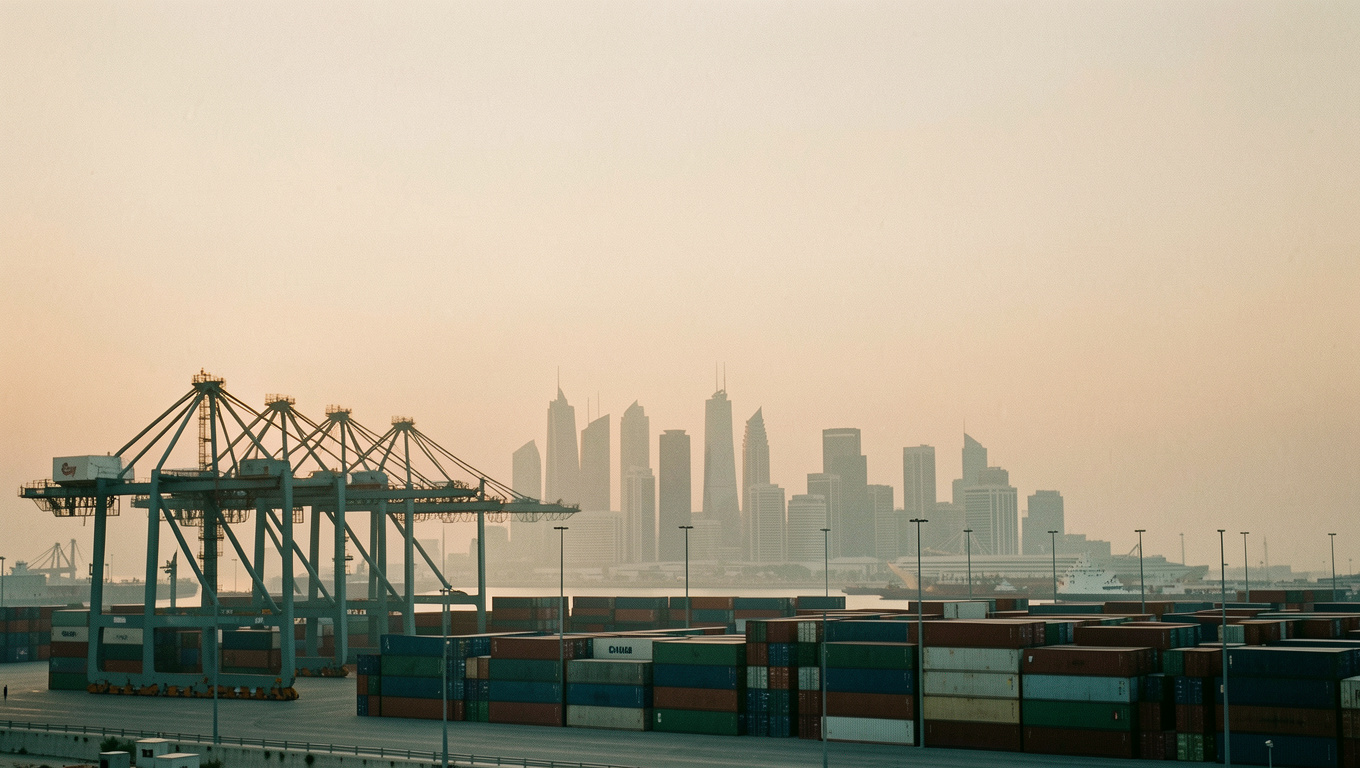
Indian exporters set up in the UAE because Dubai is built to hold, trade and redistribute goods. The UAE re-exported AED 830.2 billion (about US$226 billion) of goods in 2025, according to the UAE Ministry of Foreign Trade.
A UAE entity can stock inventory, sell across the GCC and Africa, and own customer relationships that a distributor would otherwise control. For the ownership, ODI and funding steps that apply to any sector, see our guide to setting up a UAE subsidiary of an Indian company.
Key points
Yes, an Indian company can own 100% of a Dubai company, either in a free zone or, for most activities, on the mainland.
The UAE can play six different commercial roles for an Indian goods business. Pick the role first; the licence, location and tax position follow from it.
An Indian parent funds a UAE subsidiary under India's 2022 Overseas Investment framework, through its bank, with annual reporting.
UAE corporate tax is 9% on taxable income above AED 375,000. A free zone company pays 0% only on income that meets the Qualifying Free Zone Person rules, and many trading flows do not.
The structure only holds if the UAE entity has real people, decisions and risk. Tax follows functions.
More than 2,300 Indian companies already operate from Jebel Ali Free Zone (JAFZA) alone, according to DP World. Some are there because Dubai is a customer market.
Many are there for something less obvious: the UAE as a regional warehouse, a GCC sales hub, a door into Africa, or a place to run an international trading book that does not need to sit in India. This guide is for founders and finance heads of Indian exporters, traders and distributors, roughly ₹25 to ₹300 Cr in turnover, who are asking whether a UAE entity makes commercial sense, and how to build one that stands up in both countries.
If you are still exporting from India and want the basics first, start with our guide on how to export from India to Dubai.
Why do Indian exporters set up in the UAE?
Indian exporters set up in the UAE because it is one of the world's largest trading and re-export hubs, it sits next to the GCC and Africa, and Indian-origin goods enter it largely duty-free under CEPA. Tax is rarely the strongest reason, and it should never be the only one.
Three facts frame the opportunity:
The UAE is a trading economy. UAE non-oil foreign trade reached AED 3.8 trillion in 2025, up 27%, and re-exports grew 15.7% to AED 830.2 billion, according to the UAE Ministry of Foreign Trade (31 January 2026).
India is already deeply embedded. India–UAE bilateral trade reached US$101.25 billion in FY 2025–26, with Indian exports to the UAE of about US$37.4 billion, as reported by All India Radio News citing the Government of India. JAFZA reports 2,300+ Indian companies, 283 new Indian registrations in 2024, and a 40% rise in trade volume from India that year (DP World, May 2025).
CEPA lowers the entry cost. The India UAE CEPA entered into force on 1 May 2022. The UAE eliminated duties on 97.4% of its tariff lines, covering 99% of its imports from India by value (PIB, Government of India). Preference applies only to goods that meet the agreement's rules of origin and carry the right certificate.
The physical infrastructure matters as much as the statistics. DP World describes Jebel Ali as having over 80 weekly services connecting more than 150 ports. Next to it, JAFZA lets a trading business land, store, split and re-ship stock while customs duty stays suspended, because the goods have not entered the UAE mainland.
What roles can the UAE play for an Indian goods business?
The UAE can play at least six different roles for an Indian goods business, and each needs a different set-up. Most structuring mistakes start because a company sets up "a Dubai company" without deciding which of these it is building.
Role | What the UAE entity does | Typical trigger |
|---|---|---|
1. UAE as a market | Imports from India and sells to UAE customers, replacing or managing a local distributor | UAE customers ask for a local invoice; distributor margin or control becomes a problem |
2. GCC distribution hub | Holds regional stock and sells into Saudi Arabia, Oman, Qatar, Kuwait and Bahrain | You are managing four or more GCC distributors separately |
3. Africa gateway | Sells to African buyers and distributors who already source Indian goods through Dubai | Africa is in your five-year export plan |
4. Re-export and trading hub | Buys from India and from third countries, and sells to customers worldwide | Customers want products you do not make; you already source from China, Vietnam or Türkiye |
5. Consolidation hub | Combines goods from several origins into mixed orders and smaller onward shipments | Customers order mixed baskets; shipping from each origin separately is slow and costly |
6. Regional commercial HQ | Runs international sales, procurement, distributor management and selected contracts | International revenue is multi-country and needs its own leadership |
Role 1, the UAE as a market, is the simplest. A food, building-materials or engineering exporter that already sells to UAE importers sets up its own entity to own pricing, inventory and the customer relationship. The gain is not just the distributor's margin. It is turning the UAE from an export destination into a market you control.
Role 2, the GCC hub, asks a different question: why build six disconnected export relationships if the GCC is becoming one region for you? A UAE entity can centralise regional stock, sales, credit control and logistics coordination. Our guide to building a GCC distribution hub compares the hub model with country-by-country distributors.
Role 3, the Africa gateway, is less obvious and often more valuable. DP World positions Bharat Mart, its marketplace under construction in JAFZA, as a way for Indian exporters to reach buyers in the GCC, Africa and beyond, and DP World said in May 2025 that it would open in 2026. Read more on exporting to Africa from Dubai and on Bharat Mart Dubai.
Role 4, the trading hub, suits a manufacturer that is quietly becoming a trader. Suppose a ₹200 Cr Rajkot pump maker sells its own pumps abroad, but customers also want motors from China and valves from Türkiye. Routing those third-country goods through India adds cost and time for no reason.
A UAE trading entity can buy from every source and sell to every customer. Our guide to re-exporting from Dubai covers the mechanics.
Role 5, consolidation, is a supply-chain decision, not a tax one. Stock from India, China and Vietnam lands in a bonded warehouse in Dubai, is combined into customer orders, and moves on by sea, air or road.
Role 6, the regional HQ, is where the UAE entity has its own leadership, sales team, procurement and contracts. At this stage transfer pricing becomes coherent, because you can describe what India does, what the UAE does, and what profit each should earn.
One caution on trade agreements. The UAE has signed CEPAs with many countries, but re-exporting Indian or Chinese goods through Dubai does not make them UAE-origin. Preference under any agreement depends on its rules of origin. Whether real processing or assembly in the UAE could change origin is a product-by-product question, not a marketing line.
Free zone or mainland: which licence does a trading business need?
A trading business that mainly re-exports, holds bonded stock or sells to buyers outside the UAE usually fits a free zone such as JAFZA. A business that mainly sells to UAE customers, especially end users or government buyers, usually fits a mainland licence from Dubai's Department of Economy and Tourism (DET). Many groups end up with both.
Factor | Free zone (e.g. JAFZA) | Dubai mainland (DET) |
|---|---|---|
Foreign ownership | 100% | 100% for most activities since 2021; some strategic activities restricted |
Selling to UAE mainland customers | Through a distributor, or under a DET permit or licence since 2025 | Direct |
Customs on imported stock | Duty suspended while goods stay in the zone; due on entry to mainland | Duty due on import, generally 5% of CIF value, or CEPA preferential rate if origin rules are met |
Corporate tax | 0% on qualifying income if all QFZP conditions are met; 9% otherwise | 9% above AED 375,000 |
Annual licence fee example | JAFZA general trading licence AED 15,000 a year, plus facility and registration costs | General trading: about AED 29,685 in DET fees; AED 38,000 to 55,000 in year one with office and one visa (provider estimate) |
Since 2025, the line between the two has softened. Under Dubai Executive Council Resolution No. 11 of 2025, free zone companies (other than DIFC entities) can operate on the Dubai mainland through a DET licence or a temporary permit.
The Free Zone Mainland Operating Permit, launched in October 2025, costs AED 5,000 for six months, renewable, according to the Dubai Media Office. Activities must be on DET's eligible list and the free zone authority must approve.
Costs vary widely by zone, activity group and office type. Our Dubai trading licence cost guide sets out official fee schedules and typical ranges, and our JAFZA company setup cost guide covers Jebel Ali in detail. For a wider comparison beyond trading, see Dubai mainland vs free zone.
How does an Indian parent set up a UAE trading subsidiary?
An Indian company sets up a UAE subsidiary by making an overseas direct investment (ODI) under India's 2022 Overseas Investment framework, through its authorised dealer bank, and then incorporating the UAE entity with the chosen free zone or DET. Most trading subsidiaries fall under the automatic route, so no prior RBI approval is needed if the conditions are met.
The sequence typically looks like this:
Decide the owner. Indian parent, promoters directly under the Liberalised Remittance Scheme, or another holding entity. Each has different consequences for control, future fundraising, dividends and exit. For most operating trading businesses, the Indian parent is the natural owner because the UAE entity is part of the same commercial chain.
Check ODI eligibility and limits. The RBI's Overseas Investment Directions, 2022 (issued 22 August 2022) allow investment under the automatic route in a foreign entity engaged in a bona fide business activity. Total financial commitment, including equity, loans and guarantees, is generally capped at 400% of the Indian entity's net worth under the automatic route. Investment by way of cash is not permitted.
File Form FC through your AD bank with board approval and supporting documents before or alongside the remittance, then report the share certificates and file the Annual Performance Report each year.
Incorporate in the UAE. Reserve the name, submit shareholder documents (attested where required), sign the facility lease, and obtain the licence. Then apply for establishment card, visas and the bank account.
Register for UAE tax. Corporate tax registration is required for UAE companies, and the FTA charges an AED 10,000 penalty for late registration. VAT registration is mandatory once taxable supplies and imports exceed AED 375,000 over 12 months.
Paper the intercompany flows. A supply agreement between India and the UAE, pricing policy, credit terms and who bears inventory and credit risk.
How you fund the subsidiary matters as much as how you form it. Equity is simple but slow to return. A loan from the parent gives a cleaner way to bring cash back, but it must carry an arm's-length interest rate. Our guides to overseas direct investment rules and to setting up a UAE subsidiary of an Indian company go deeper on ownership and funding.
Tax: what does "free zone" really mean for a trading company?
"Free zone" does not mean tax-free. A free zone company pays 0% corporate tax only on qualifying income, and only if it meets every Qualifying Free Zone Person (QFZP) condition. Everything else is taxed at 9%, and a breach can remove the 0% rate for five tax periods.
UAE corporate tax basics
Rates: 0% on taxable income up to AED 375,000 and 9% above that, under Federal Decree-Law No. 47 of 2022.
Small Business Relief: businesses with revenue up to AED 3 million can elect relief for tax periods ending on or before 31 December 2029, after Ministerial Decision No. 131 of 2026 extended the regime. It is not available to Qualifying Free Zone Persons or members of large multinational groups.
Large groups: groups with global revenue of €750 million or more face a 15% Domestic Minimum Top-up Tax from financial years starting on or after 1 January 2025. Most mid-sized Indian exporters are below this threshold.
When does a trading company qualify for 0%?
A qualifying free zone person must keep adequate substance in the free zone, earn qualifying income, comply with transfer pricing rules, prepare audited financial statements, not elect into the standard regime, and keep non-qualifying revenue within the de minimis limit: the lower of 5% of total revenue or AED 5 million (Ministerial Decision No. 229 of 2025).
Under Cabinet Decision No. 100 of 2023, income from a non-free-zone customer is qualifying only if it comes from a listed Qualifying Activity. For goods businesses, the two that matter most are:
Distribution of goods in or from a Designated Zone. The goods must enter the UAE through the designated zone and be sold to a customer who resells or processes them for sale. JAFZA is a designated zone; check your zone on the FTA's list.
Trading of Qualifying Commodities. Metals, minerals, industrial chemicals, energy and agricultural commodities with a recognised quoted price, excluding products packaged for retail sale.
Sales to individuals are an Excluded Activity. So a JAFZA entity selling to distributors in Kenya and Oman may earn qualifying income, while the same entity selling packaged goods to UAE consumers, or a non-designated-zone trader selling to end users, may not. Getting this wrong does not just tax the excess. It can cost the whole entity its QFZP status.
VAT and customs
UAE VAT is 5%. Supplies of goods between companies inside designated zones can be outside the scope of UAE VAT, but goods moving to the mainland, and most services, are not. Our guide on whether VAT is applicable for free zone companies in the UAE explains the designated-zone rules.
Customs duty at the GCC common external tariff, generally 5% of CIF value, is suspended while goods stay in a free zone and becomes payable when they enter the mainland, unless CEPA preference applies.
The India side
India taxes the Indian parent on its own profit and on dividends it receives, with credit for any UAE tax under the India–UAE tax treaty. Three Indian rules shape the structure:
Transfer pricing. Sales from India to the UAE subsidiary must be at arm's length. If the UAE entity earns a large margin while India does the selling and carries the risk, expect the Indian tax department to reallocate profit. See our practical guide to transfer pricing for India–UAE groups.
Place of effective management. Under the Income-tax Act, 2025 (in force from 1 April 2026), a foreign company is resident in India if key management and commercial decisions are, in substance, made in India. A UAE company run entirely from Mumbai is at risk.
Customs and GST on exports. Export documentation, the invoice route and actual movement of goods must match, especially where the UAE entity invoices goods shipped directly from India to a third country.
Which stage makes sense for you? A decision checklist
The right stage is the one where a UAE entity changes something commercial: who the customer buys from, where stock sits, or who runs international sales. If you cannot name that change, you probably do not need the entity yet.
Work through these questions in order:
Where are your customers, and who owns the relationship today? If a single UAE distributor controls your market, Role 1 may be enough.
How many GCC or African markets do you serve, and how? Four or more separately managed distributors points towards a hub (Roles 2 and 3).
What share of your international range is made outside India? If it is meaningful, a trading hub (Role 4) deserves a look.
Do customers order mixed baskets or need faster delivery? That is a consolidation and warehousing question (Role 5).
Who would actually work in the UAE? Name the people: sales, procurement, logistics, credit control. No people, no substance.
Who would make the decisions? If every pricing, credit and supplier decision still happens in India, the UAE entity is not yet a regional HQ (Role 6), and the tax analysis must reflect that.
What will it cost to run, honestly? Licence, office, visas, audit, tax filings, banking and management time, against the margin or growth you expect.
A worked example: a ₹120 Cr Pune engineering exporter sells into six GCC markets through five distributors and is starting to win business in East Africa. Two senior sales managers already spend most of their time in Dubai.
A JAFZA entity holding regional stock, with those two managers and a logistics coordinator on its payroll, could be a credible Role 2 to Role 3 set-up. If the same company had no one willing to move and simply wanted to invoice from Dubai, the answer would be different.
The Greenwolf view
At Greenwolf we start with the commercial design, not the tax rate. The question is never "what is the UAE tax rate?" It is "what does the UAE entity actually do, and what does India actually do?" Tax follows functions, risks and substance, in both countries.
That means we work through the business before the structure:
Which of the six roles fits your product, customers and next five years, and which you can skip.
Ownership: Indian parent or promoters, and why.
ODI and FEMA: how the entity is established and funded, and how cash comes back.
Functions and risk: who sells, who buys, who holds stock, who carries credit risk, and therefore what margin each entity should earn.
Customs and origin: actual movement of goods against invoice flow, and whether any CEPA benefit genuinely applies.
UAE tax position: whether the activity can be qualifying income at all, or whether the honest answer is 9%.
Future architecture: what happens if the UAE later becomes your international HQ.
A UAE entity that reflects real commercial activity is easier to bank, easier to defend in both tax systems, and more valuable if you later raise money or sell. One built only for a rate rarely survives its first serious question.
Plan your UAE structure with Greenwolf
If you are weighing a UAE entity, get our India→UAE corridor checklist, or book a 30-minute structuring call. We will map which of the six roles fits your business, what the entity would need to do, and how the India and UAE sides would work together, before you spend on a licence.
This article is general information, not advice for a specific case. Rules and fees change; take advice on your own facts before acting.
Author – Team Greenwolf
10 October, 2026 | 18 Min Read
Have a question about this?
Every structure depends on the business behind it. Tell us about yours and a strategist will reply within one working day.